Pulse Protein Yield Improvement Trial Guide
For a pulse protein isolate plant, an enzyme trial only matters if it can be measured against the way the line actually runs: slurry viscosity, solids movement, separation clarity, filtration rate, protein recovery, cleanability, and stable throughput.
Hilum Process Co. supplies enzyme solutions for pulse protein processing teams that want a controlled, plant-relevant way to test yield improvement without disrupting production discipline. If you are comparing an enzyme supplier for pulse protein processing, this guide outlines how to structure the trial, what to track, and how to decide whether the result is worth scaling.
Request a quote
What a good pulse protein enzyme trial should prove
A useful trial should not be built around lab curiosity. It should answer operational questions:
- Does the slurry move more predictably through the extraction stage?
- Are insoluble fractions easier to separate?
- Does the decanter or centrifuge show more stable loading?
- Does filtration or membrane handling become less restrictive?
- Is protein recovery improved without creating downstream quality problems?
- Are operators seeing less variability from shift to shift?
- Can the plant repeat the result under normal process constraints?
The best outcome is not just a higher yield number. It is a yield gain that operators can run, supervisors can verify, and production managers can defend.
Where enzymes can help in pulse protein isolate processing
Pulse materials bring natural variability into the plant. Crop source, particle size, hydration behavior, starch and fiber interactions, and upstream milling conditions all influence extraction and separation.
Enzymes are typically evaluated where they can improve process behavior without forcing a major line redesign. In a pulse protein isolate plant, the relevant value points often include:
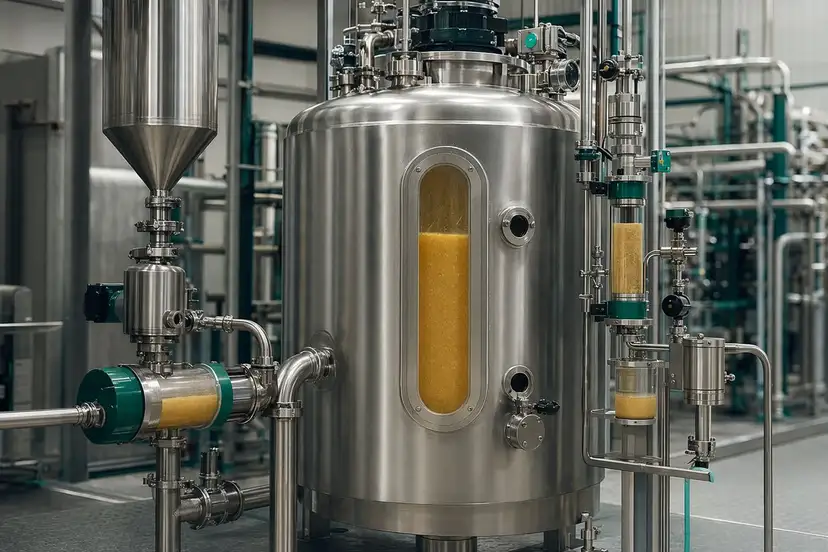
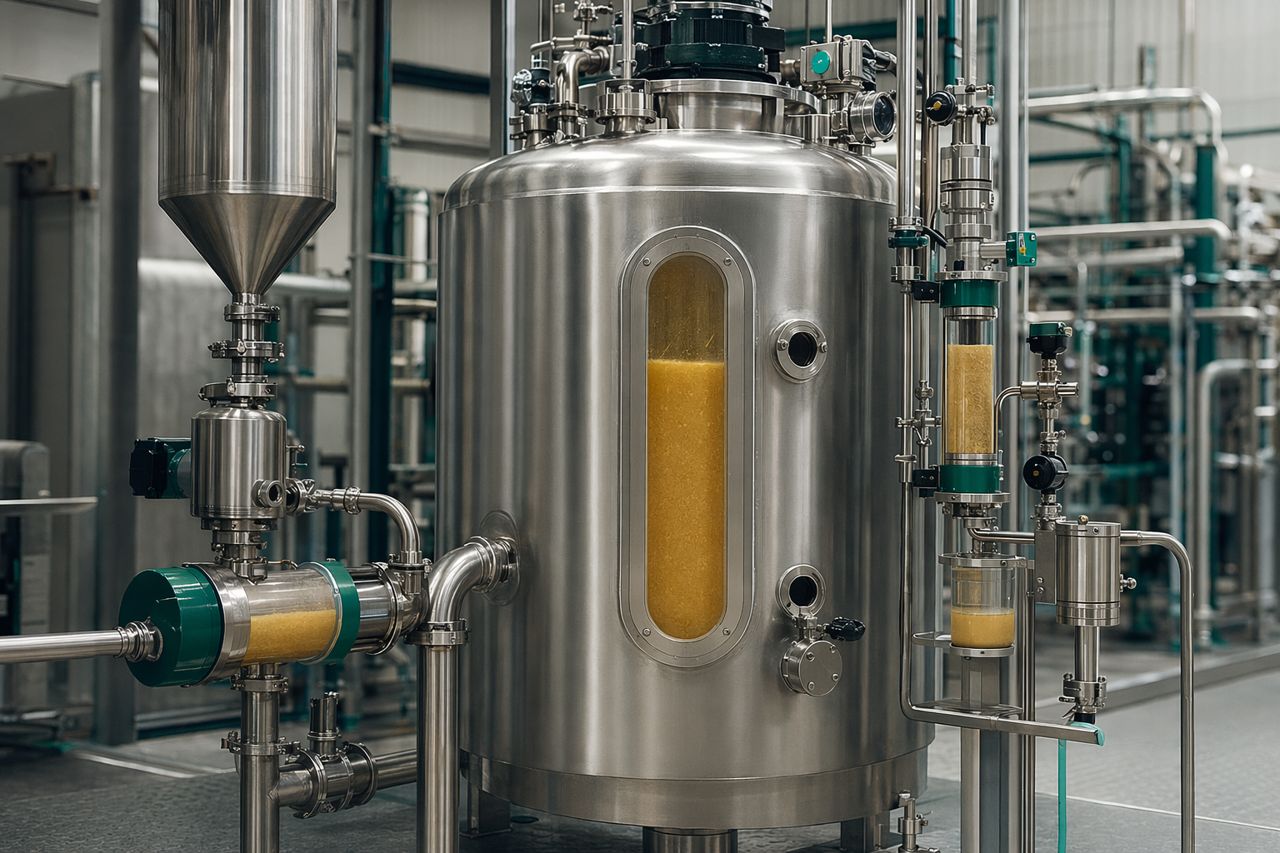
Slurry behavior
A more manageable slurry can improve pumping, mixing, tank turnover, and downstream flow consistency. The objective is not to make the process delicate. It is to make it more controllable.
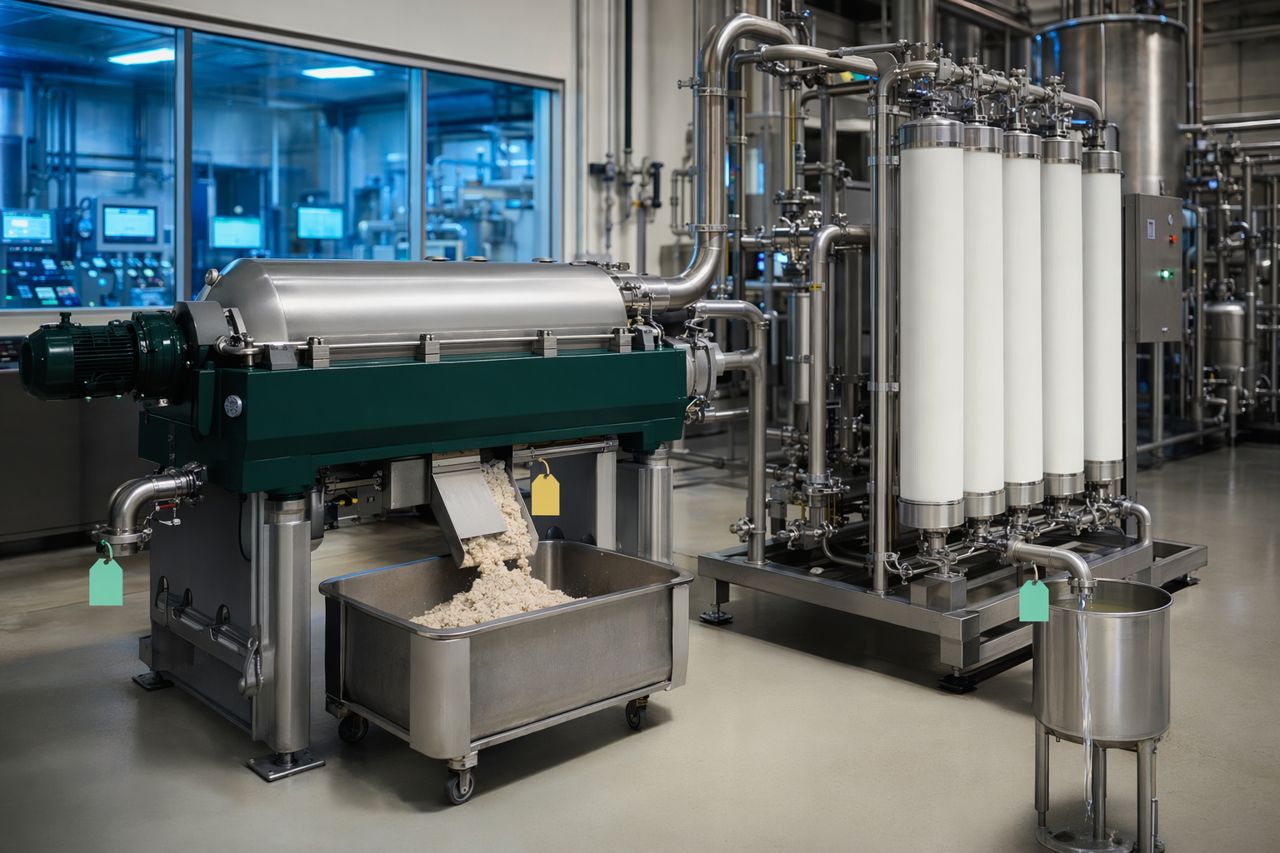
Separation efficiency
When the liquid and insoluble phases separate more cleanly, the plant can see better decanter response, reduced carryover, and more consistent solids discharge. This can support protein recovery while reducing operator intervention.
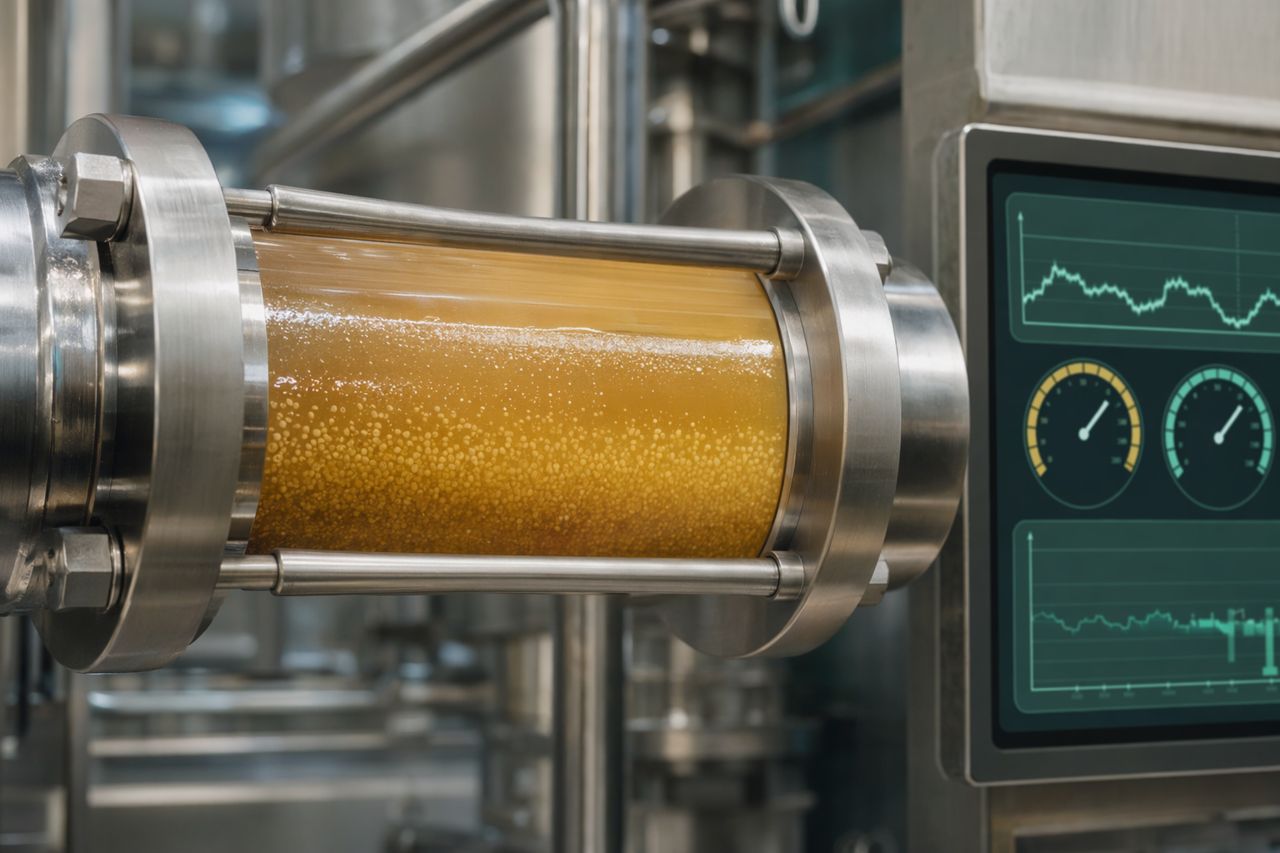
Filtration and membrane performance
If the process creates fewer restrictive fines or less problematic suspended material, filtration steps may run with improved stability. For plants constrained by filter loading or membrane behavior, this can be a meaningful bottleneck relief point.
Protein recovery
Enzyme selection should be tied to measurable protein recovery, not broad claims. The target is improved extractability and cleaner recovery under the plant’s real pH, temperature, residence time, and equipment limits.
Downtime and cleaning pressure
A trial should watch for indirect value: fewer plugged screens, less difficult slurry handling, reduced unplanned stops, and more predictable clean-in-place cycles. These factors often decide whether a yield improvement is commercially useful.
Recommended controlled trial structure
A controlled enzyme trial should be simple enough for the plant to run and disciplined enough to produce a decision.
1. Define the baseline window
Before introducing an enzyme program, establish baseline performance under current conditions. Use recent production data where possible, then confirm with a controlled baseline run.
Track:
- Feed lot and pulse type
- Milling or particle preparation conditions
- Hydration and extraction parameters
- Slurry solids behavior
- Separation loading and discharge characteristics
- Filtration rate or restriction points
- Protein in relevant process streams
- Final isolate recovery
- Downtime, cleaning events, and operator observations
The baseline should reflect normal plant operation, not an ideal day that cannot be repeated.
2. Select trial objectives
Do not try to prove everything at once. Choose primary and secondary goals.
Common primary goals:
- Improve protein recovery
- Reduce separation losses
- Improve filtration or membrane throughput
- Stabilize slurry handling
Common secondary goals:
- Reduce variability between batches or shifts
- Lower unplanned intervention
- Improve solids discharge consistency
- Reduce cleaning pressure around a known bottleneck
3. Keep the process change contained
The enzyme should be the main variable. Avoid changing multiple process parameters at the same time unless the plant has a clear reason and a way to separate the effects.
Typical control points include:
- Addition location
- Process temperature window
- pH window
- Hold time or residence time
- Mixing intensity
- Feed solids range
- Downstream separation timing
Hilum Process Co. works with plant teams to match enzyme selection to practical operating windows instead of asking the line to run around the enzyme.
4. Run side-by-side or sequential comparisons
Depending on plant configuration, the cleanest comparison may be side-by-side production, split-stream evaluation, or sequential runs using comparable raw material. The right design depends on your equipment, scheduling, and risk tolerance.
The key is to preserve traceability:
- Same or comparable raw material lot
- Documented operating conditions
- Clear sampling points
- Production staff notes
- Comparable downstream handling
- Defined acceptance criteria before the run begins
5. Measure process outcomes, not just chemistry
A trial should capture what plant managers actually need to know.
Recommended evaluation categories:
- Protein recovery into the target stream
- Solids loss and carryover
- Slurry viscosity and flow behavior as observed in operation
- Decanter, centrifuge, or separator response
- Filtration or membrane restriction
- Yield consistency across the run
- Off-spec risk
- Cleaning and downtime impact
- Operator acceptance
The trial should produce a decision-ready view: continue, adjust, scale, or reject.
What Hilum Process Co. brings to the trial
Hilum Process Co. supports enzyme trials with a practical focus on pulse protein isolate production. We help your team define the target outcome, select the appropriate enzyme approach, and structure the plant trial so the result can be evaluated with confidence.
Our support is built around:
- Process-first enzyme selection
- Trial planning for production environments
- Clear comparison points against baseline operation
- Attention to slurry behavior and separation efficiency
- Practical scale-up thinking from the start
- Documentation that helps technical and operations teams align
We are not interested in a trial that looks good on paper and fails on the floor. The goal is controlled improvement that fits your plant.
Trial readiness checklist
Before requesting a quote, it helps to gather a few details. You do not need a perfect data package. A practical process snapshot is enough to begin.
Useful information includes:
- Pulse source and product target
- Current extraction and separation layout
- Main throughput constraint
- Known slurry or filtration issues
- Current yield or recovery benchmark
- Process pH and temperature ranges
- Residence time available for enzyme treatment
- Batch or continuous operation details
- Any downstream quality constraints
- Trial timing and production window
With this information, Hilum Process Co. can recommend a trial path that respects plant limits and focuses on measurable value.
Signs an enzyme trial may be worth running
A yield improvement trial is usually worth evaluating when the plant is seeing one or more of the following:
- Protein losses in fiber, starch, or insoluble streams
- Variable decanter performance across raw material lots
- Filtration rates that limit production scheduling
- Slurry behavior that changes unpredictably during extraction
- Excessive operator attention around separation steps
- Cleaning pressure tied to fine solids or sticky residues
- A yield ceiling that cannot be resolved with mechanical changes alone
In these cases, enzyme treatment may provide a lower-disruption route to improved recovery and process stability.
How to evaluate the commercial result
A successful trial should be reviewed across both yield and operating impact.
Ask:
- Did protein recovery improve enough to matter commercially?
- Was the result repeatable under normal production conditions?
- Did the enzyme create any downstream handling or quality concerns?
- Did the process become easier to run, or only different?
- Did the improvement reduce a real bottleneck?
- Is the cost-in-use justified by recovery, throughput, or downtime reduction?
If the answer is clear, the plant can move from trial to controlled adoption. If the result is promising but not complete, the next step may be an adjusted trial with tighter focus on the limiting unit operation.
Request a quote for a controlled pulse protein trial
If your plant is ready to compare enzyme options against real production data, Hilum Process Co. can help define the trial scope and supply the right enzyme solution for evaluation.
Use the on-site form below to request a quote. Include your pulse source, process stage of interest, current bottleneck, and intended trial window.
Request a quote