Seven Process Bottlenecks That Limit Pea Protein Isolate Yield
Pea protein isolate yield is rarely lost in one dramatic failure. More often, it is lost in small, repeatable process penalties: incomplete hydration, unstable slurry viscosity, poor fiber release, centrifuge load swings, membrane fouling, and drying losses that compound across the line.
For a pulse protein isolate plant, enzyme strategy should not be treated as a laboratory add-on. It belongs in the operating discussion alongside grind profile, pH curve, residence time, solids loading, separation capacity, and cleaning frequency.
Hilum Process Co. supports plants that need enzyme programs tied to plant behavior: steadier extraction, cleaner separation, lower rework, and trials that operators can actually run. As an enzyme supplier for pulse protein processing, our focus is not on abstract enzyme claims. It is on whether the line becomes easier to control.
1. Hydration that looks complete, but is not complete enough
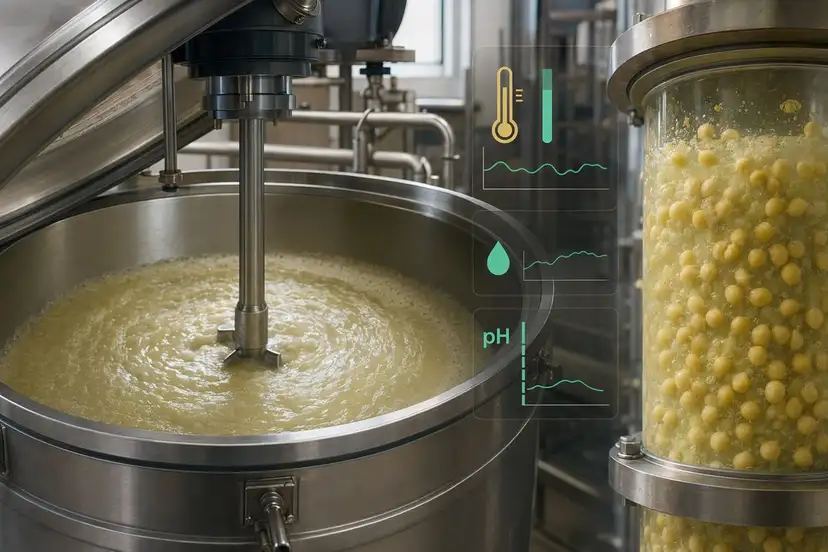
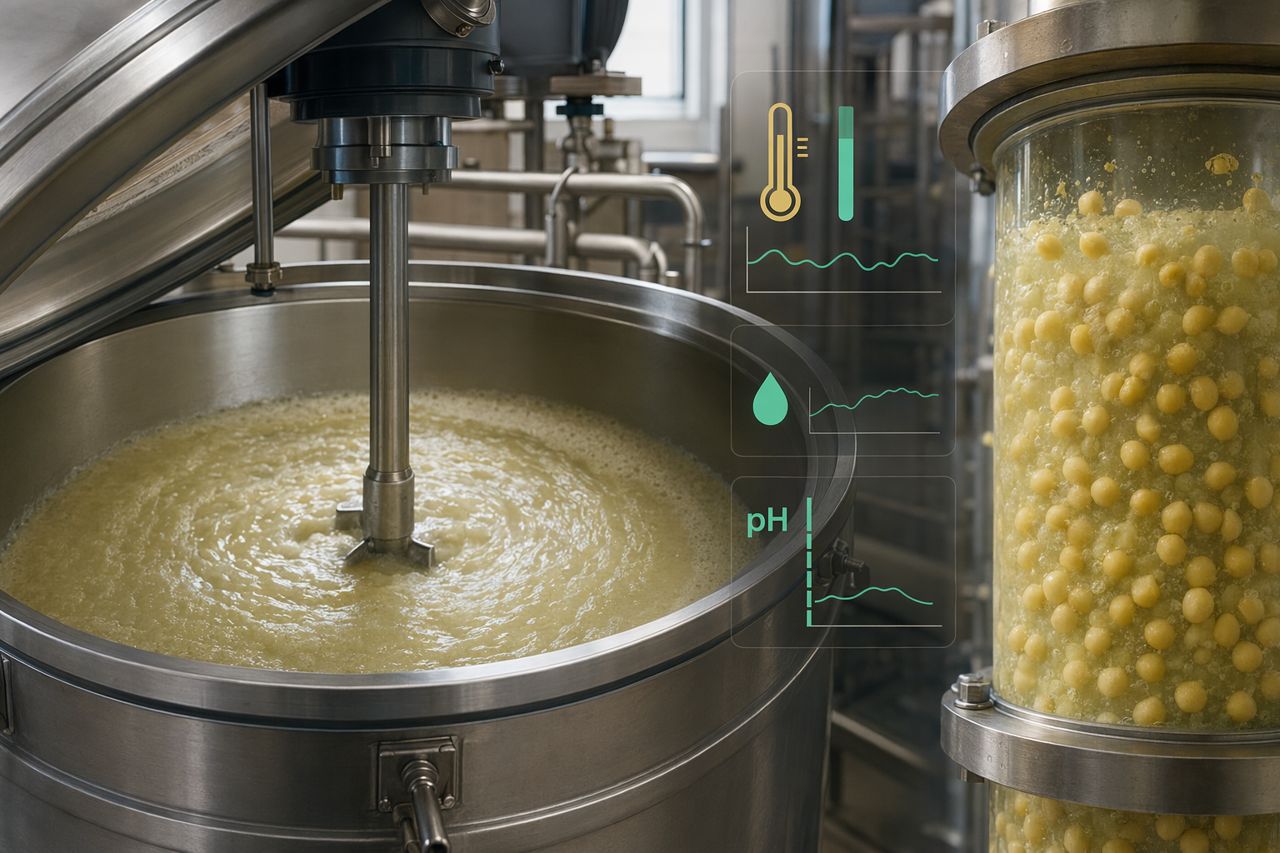
Hydration is one of the earliest points where yield becomes locked in or lost. Pea flour or milled split peas may appear fully wetted, while internal particles continue to hydrate unevenly. That uneven hydration can create thick spots, dry cores, and variable extraction performance downstream.
Common plant symptoms include:
- Slurry viscosity changing during transfer
- Inconsistent pump load after hold tanks
- Localized clumping around high-solids additions
- Longer mixing time than the batch plan allows
- Protein extraction that varies by flour lot or grind profile
Enzymes can help by modifying non-protein matrix behavior around starch, cell wall material, and soluble fibers. The goal is not to make the slurry thin at all costs. The goal is to build a hydration window where solids disperse predictably and the extraction stage sees a more consistent feed.
What to watch in plant trials
Track hydration time, mixer amperage, transfer behavior, tank bottom residue, and centrifuge feed stability. If operators say the slurry “holds together better” or “moves more evenly,” that is often more useful than a perfect bench result.
2. Extraction limited by the plant matrix, not only by protein chemistry
Protein extraction depends on pH, temperature, ionic environment, residence time, grind, and solids concentration. But in pea systems, the surrounding carbohydrate and fiber matrix can limit how efficiently protein becomes available to the aqueous phase.
When extraction is matrix-limited, plants may respond by pushing harder elsewhere: more aggressive pH adjustment, longer holds, higher dilution, or more recirculation. Those actions can increase tank occupancy, load utilities, and move bottlenecks downstream.
A targeted enzyme program can support protein release by reducing the physical constraints created by cell wall and soluble fiber components. This may improve extraction consistency without forcing operators into a wider process window than the plant can comfortably control.
Buyer value
The commercial value is usually seen as better yield stability, fewer off-target extraction batches, and less dependence on extreme process settings. For plant managers, that means fewer yield surprises and a process that is easier to schedule.
3. pH movement that creates instability between steps
Pea protein isolate production depends heavily on pH transitions: alkaline extraction, protein separation, isoelectric precipitation, neutralization, and final conditioning. Each transition can affect viscosity, solubility, particle behavior, and separation performance.
Problems appear when pH changes faster than the slurry can respond physically. Local pH gradients may cause uneven protein behavior, transient thickening, or precipitation patterns that are difficult to separate cleanly.
Enzymes do not replace pH control. They can, however, reduce the background viscosity and fiber-driven instability that make pH transitions harder to manage. When the slurry responds more uniformly, pH changes tend to produce cleaner process behavior.
Practical checks
During trials, compare:
- Time to reach target pH under normal agitation
- Slurry response during caustic or acid addition
- Precipitate consistency
- Centrifuge torque or bowl load after pH transitions
- Amount of fine material carrying into the next phase
The important question is simple: does the enzyme condition make the pH step less disruptive to the line?
4. Fiber and insoluble solids carrying too much value forward
Fiber is not only a coproduct stream. It is also a process variable. Poorly conditioned fiber can bind water, trap protein-rich liquor, increase suspended solids, and reduce the sharpness of separation.
When fiber is not managed, the plant may see:
- Wet, protein-bearing insoluble fractions
- Reduced liquor clarity
- More solids entering polish steps
- Higher decanter load
- More frequent cleaning around screens, lines, or nozzles
Enzymes selected for pulse processing can help modify fiber behavior so protein-bearing liquid separates more cleanly. The intended outcome is not fiber destruction. It is controlled release and better phase behavior.
Where the value appears
Value often appears in recovery from what used to be treated as unavoidable loss. A small improvement in liquor release from fiber-rich fractions can translate into meaningful annual protein recovery when applied across continuous production.
5. Centrifugation constrained by viscosity and fine solids
Centrifuges are often blamed for yield loss, but the machine is usually responding to what the process sends it. High viscosity, floating fines, weak floc structure, or inconsistent feed solids can all reduce separation efficiency.
A plant may experience:
- Bowl load variability
- Poor cake dryness
- Cloudy centrate
- Increased recirculation
- Sensitivity to small changes in feed solids
- More operator intervention during campaign changes
Enzyme conditioning can improve centrifuge performance by changing the slurry before it reaches the bowl. Better viscosity control and reduced fine-solid interference can make separation more predictable.
Trial discipline matters
Centrifuge performance should be evaluated under realistic plant conditions. That means normal feed solids, normal flow variation, standard pH transitions, and production-grade flour variability. A useful enzyme trial should tell operators how the line behaves on a difficult day, not only on an easy one.
6. Membrane loading from upstream decisions
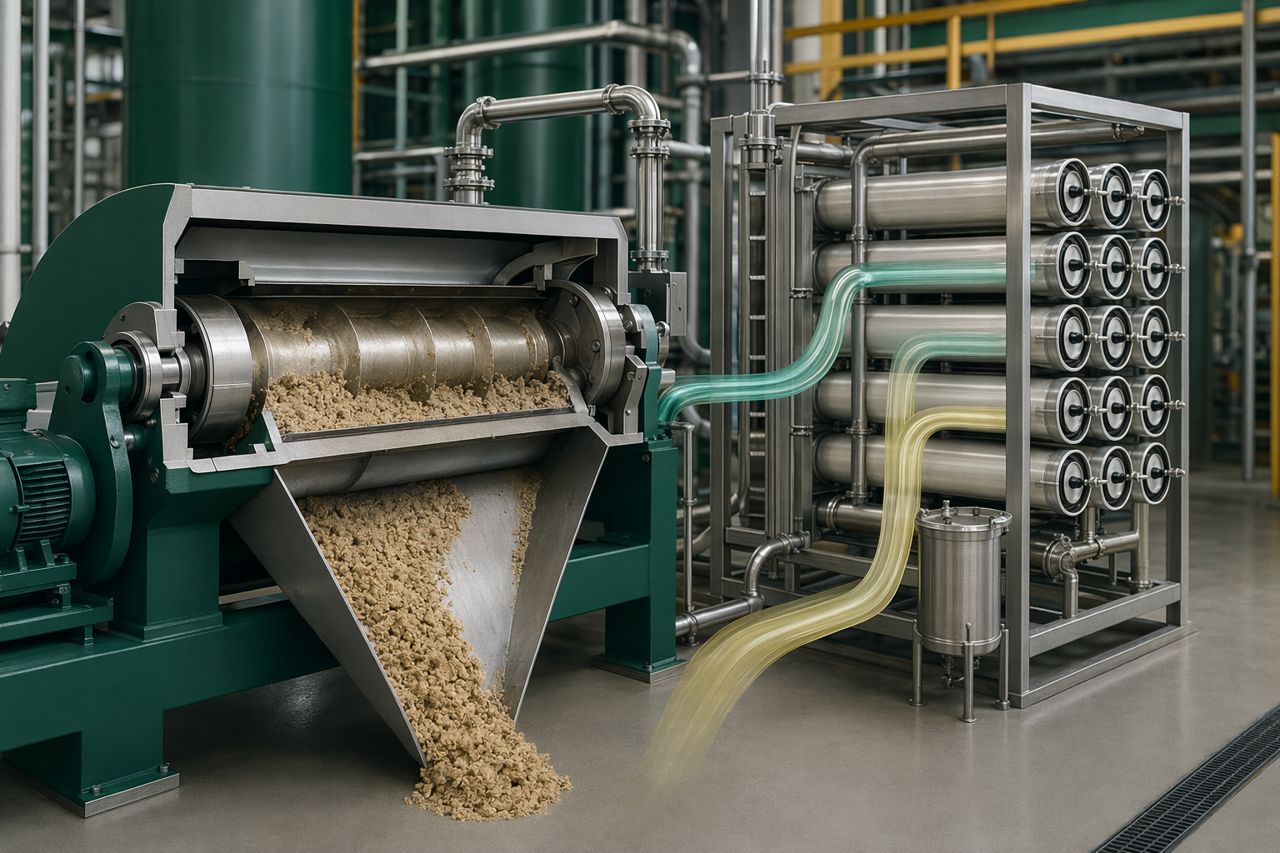
Membranes do not fail in isolation. Their loading is shaped by upstream extraction, fiber removal, centrifugation, pH management, and thermal history. If soluble fibers, fines, or poorly separated fractions carry forward, membrane performance can decline quickly.
Typical symptoms include:
- Flux decline earlier than expected
- Higher pressure rise during a campaign
- Shorter production intervals between cleaning
- Increased variability between flour lots
- Concentrate behavior that affects downstream drying
Enzyme programs can reduce membrane stress when they improve upstream clarity and soluble load behavior. The most valuable result is not only higher instantaneous flux. It is a longer, more predictable production run before cleaning becomes necessary.
What to measure commercially
Track clean production hours, pressure trend, flow stability, cleaning frequency, and product recovery around membrane steps. These are the metrics that matter to capacity planning and operating cost.
7. Drying losses caused before the dryer
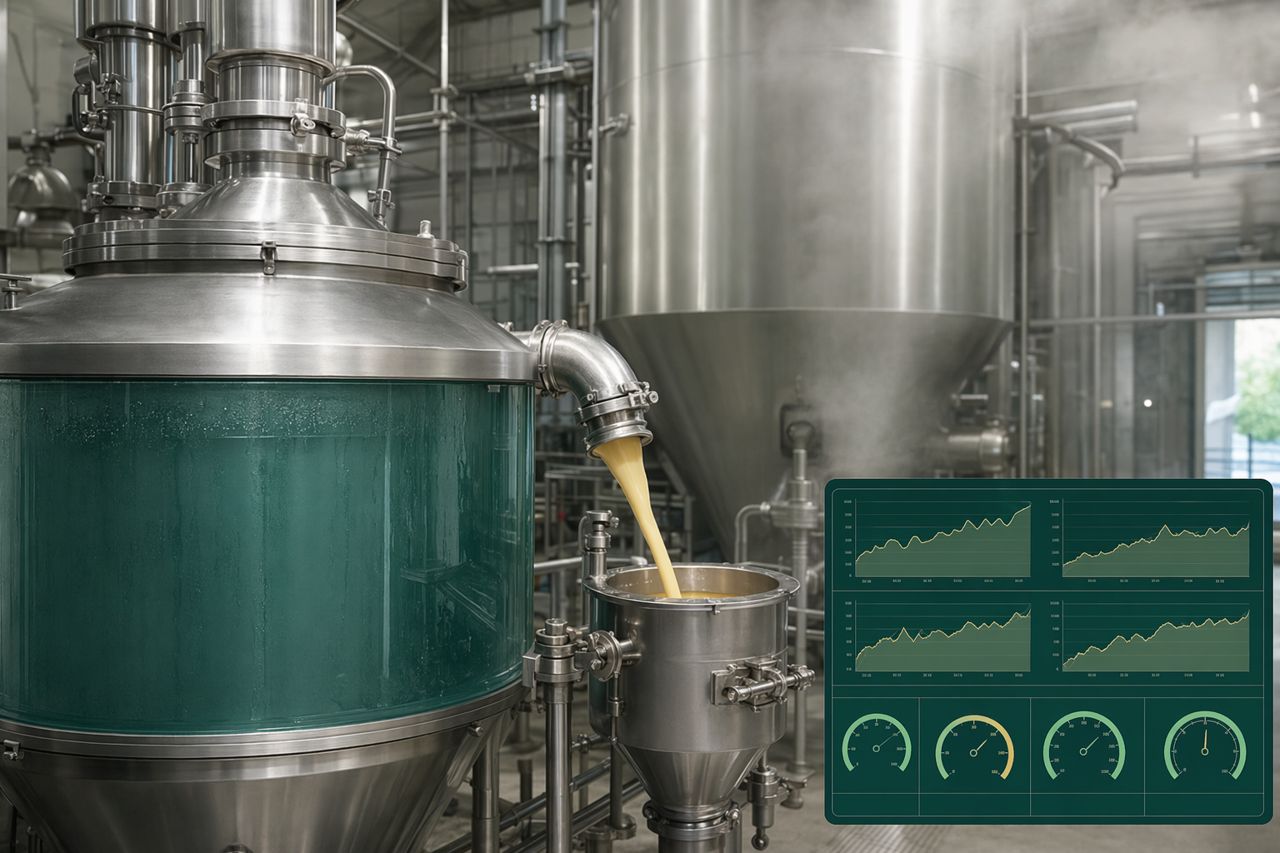
Spray drying performance is often determined before the feed reaches the dryer. Feed viscosity, solids uniformity, insoluble carryover, and thermal sensitivity can influence atomization, wall deposition, powder properties, and yield.
If upstream process conditions are unstable, the dryer may show:
- More wall buildup
- Lower run length between cleanouts
- Powder variability
- Reduced practical solids loading
- Losses in cyclone or baghouse fractions
- Operator reluctance to push throughput
Enzyme conditioning can support the dryer indirectly by helping create a more consistent concentrate. When feed behavior is stable, the dryer can run closer to its planned operating point with less correction.
The best enzyme result is boring
In a high-performing pea protein isolate plant, the best result may not look dramatic. It may look like fewer alarms, steadier transfers, cleaner separations, and a dryer that holds its setpoint. That is real value.
Building an enzyme trial around plant outcomes
A strong trial does not begin with a catalog comparison. It begins with a bottleneck map.
Before selecting an enzyme approach, define:
- The current limiting step
- The feedstock variability that matters most
- The pH and temperature windows the plant can actually hold
- The available residence time
- The separation equipment that must benefit
- The success metrics operators trust
- The economics of recovered protein, reduced cleaning, and increased throughput
Hilum Process Co. works from those constraints first. We help align enzyme selection with slurry behavior, separation targets, and the practical realities of production scheduling.
Where Hilum Process Co. fits
For pulse protein isolate plants, enzyme value should be visible in the line:
- More stable hydration and extraction behavior
- Improved liquor release from fiber-rich fractions
- Lower viscosity burden on pumps and separators
- Cleaner centrifuge and membrane performance
- Reduced downtime pressure from fouling and cleanouts
- More predictable scale-up from trial to production
If your plant is evaluating an enzyme supplier for pulse protein processing, the key question is not whether an enzyme can react in ideal conditions. The key question is whether it can help your actual process recover more value with less instability.
Request a quote
Share your pea protein isolate process target, bottleneck location, operating window, and current separation challenge through the on-site request a quote form. Hilum Process Co. will respond with a practical enzyme supply discussion and a trial path built around plant outcomes.