Membrane Filtration in Pulse Protein Plants: Yield, Fouling and Cleaning Priorities
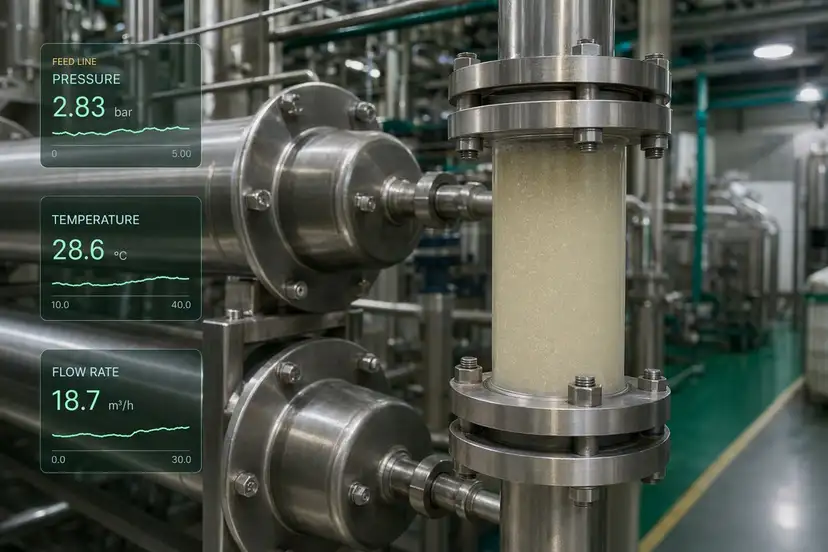
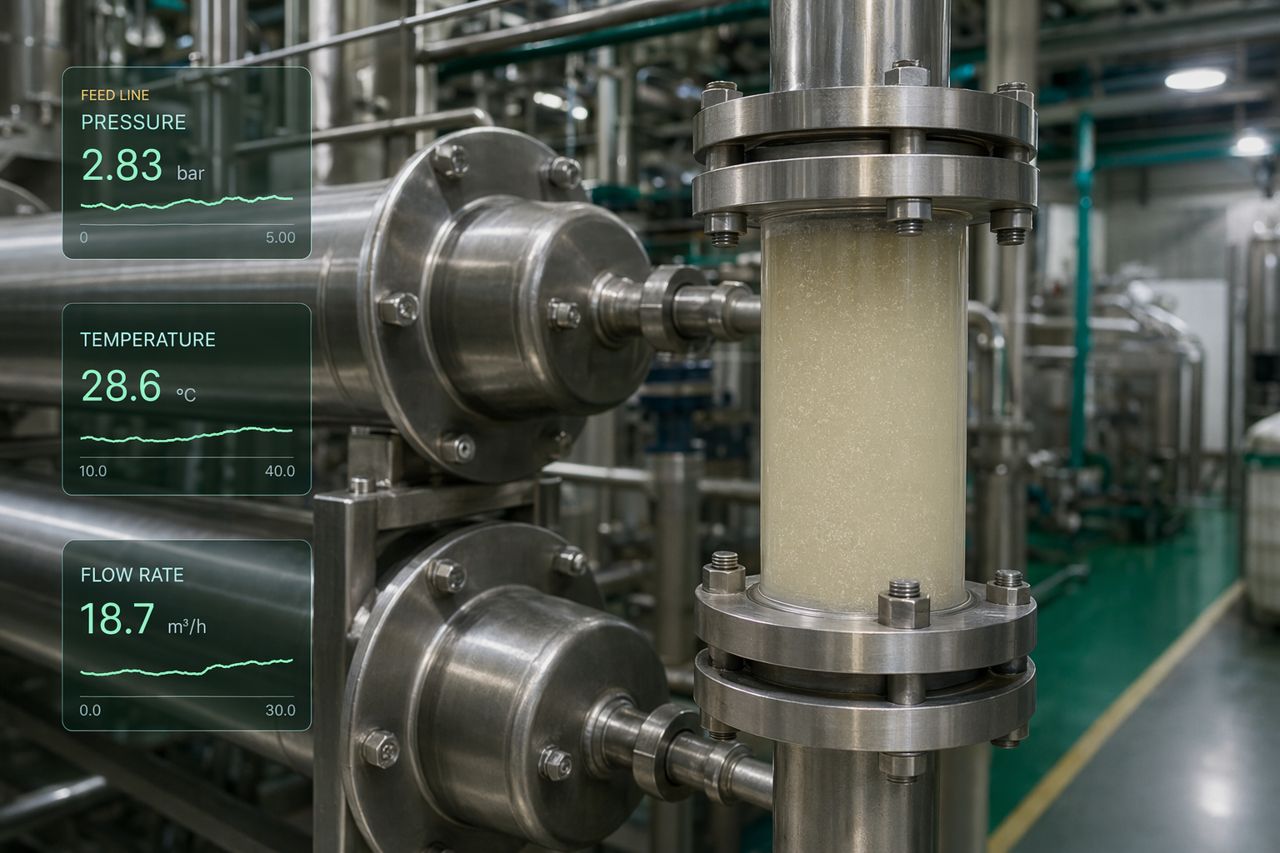
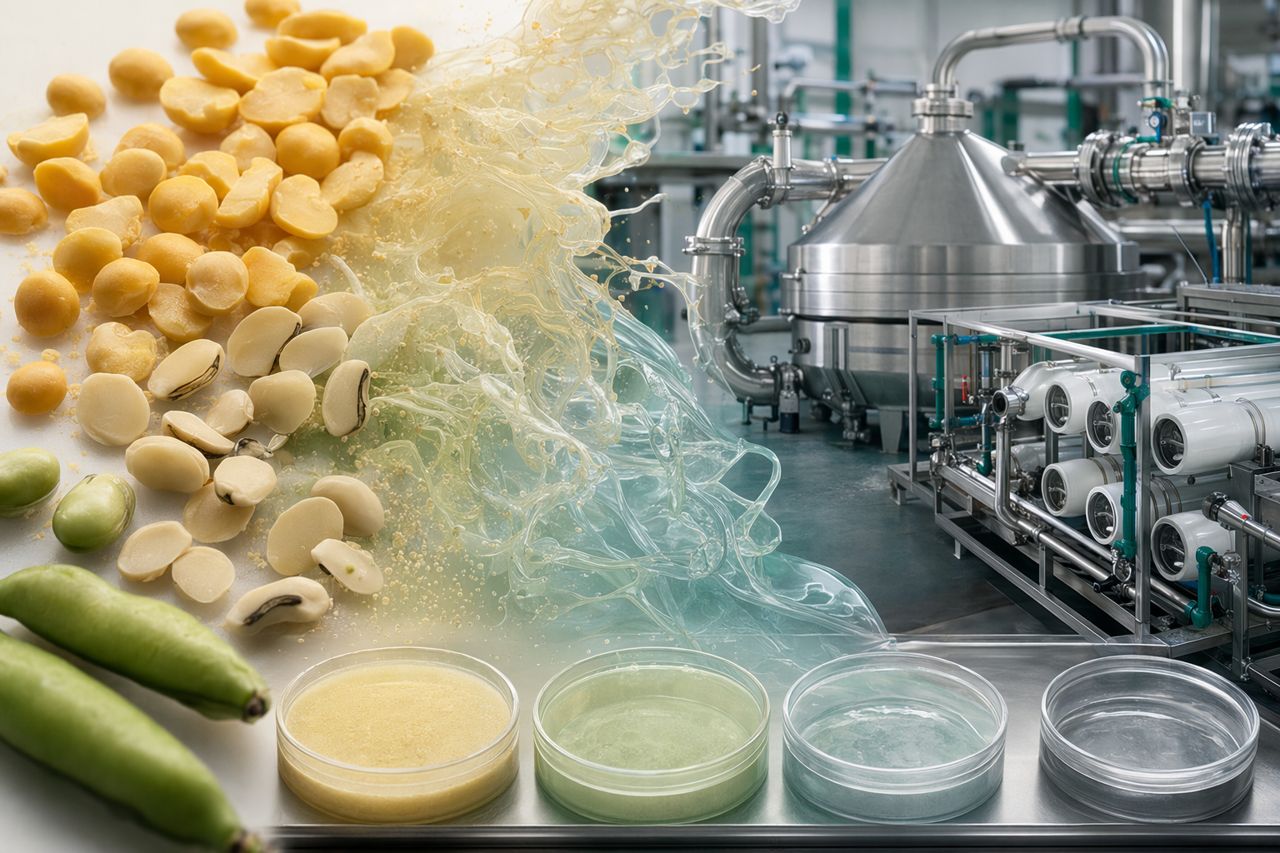
Membrane performance in a pulse protein isolate plant is rarely determined by the membrane skid alone. Pressure rise, flux decline, solids loading and cleaning frequency are often set upstream: in milling quality, extraction conditions, pH movement, slurry residence time, heat history and the way starch, fiber and cell-wall material behave before the feed reaches the filtration loop.
For plant managers, the goal is not simply higher flow through a membrane. The goal is stable separation over the run, predictable cleaning, less unplanned downtime and a protein stream that supports downstream concentration and drying without surprise losses.
Hilum Process Co. works with pulse protein processors that need enzyme programs tied to plant outcomes: better slurry behavior, cleaner separation, lower fouling pressure and repeatable production trials.
Why membrane fouling starts before the membrane
In pulse protein processing, membranes see the combined effect of multiple upstream decisions. A feed that looks acceptable in a sample jar may still carry fine insoluble material, soluble carbohydrates, degraded starch, hydrated fiber or colloidal particles that accumulate at the membrane surface.
Common contributors include:
- Over-milled material that creates fines and difficult-to-settle particles
- Incomplete wetting or uneven extraction of pulse flour
- Variable pH adjustment that changes protein solubility and aggregation behavior
- High viscosity from hydrated fiber or starch fragments
- Solids carryover from decanter or centrifuge steps
- Heat exposure that changes protein and non-protein interactions
- Long hold times that allow slurry behavior to drift between shifts
Membrane fouling is often treated as a cleaning problem. In many plants, it is more useful to treat it as a feed preparation problem.
The operating symptoms plant teams notice first
When feed quality drifts, membrane systems usually show the change through pressure and cleaning behavior before yield losses are fully visible.
Plant-floor signs include:
- Faster transmembrane pressure increase during the run
- Lower permeate flow at the same operating settings
- More frequent operator intervention to keep the skid in range
- Cleaning cycles that take longer to restore baseline performance
- Higher variability between batches or raw material lots
- Reduced separation sharpness after upstream solids breakthrough
- Unexpected bottlenecks before concentration or drying
These symptoms matter because they reduce usable production time. A membrane skid that technically runs but requires repeated adjustment is still constraining plant throughput.
Where enzymes can help in the filtration train
Enzymes do not replace mechanical separation, sound pH control or disciplined cleaning. Their value is in changing how the slurry behaves before the membrane has to process it.
For pulse protein isolate operations, targeted enzyme programs may support:
- Lower slurry viscosity before separation
- More consistent release of protein from pulse solids
- Reduced persistence of starch- or fiber-related fouling material
- Cleaner liquid-solid separation before membrane feed
- Lower solids carryover into membrane loops
- More predictable pressure development during filtration
- Trial conditions that are easier to repeat across raw material lots
The exact enzyme approach depends on the pulse source, extraction route, pH profile, temperature window, hold time, target protein specification and the existing separation equipment.
Membrane pressure is a process signal, not just a skid setting
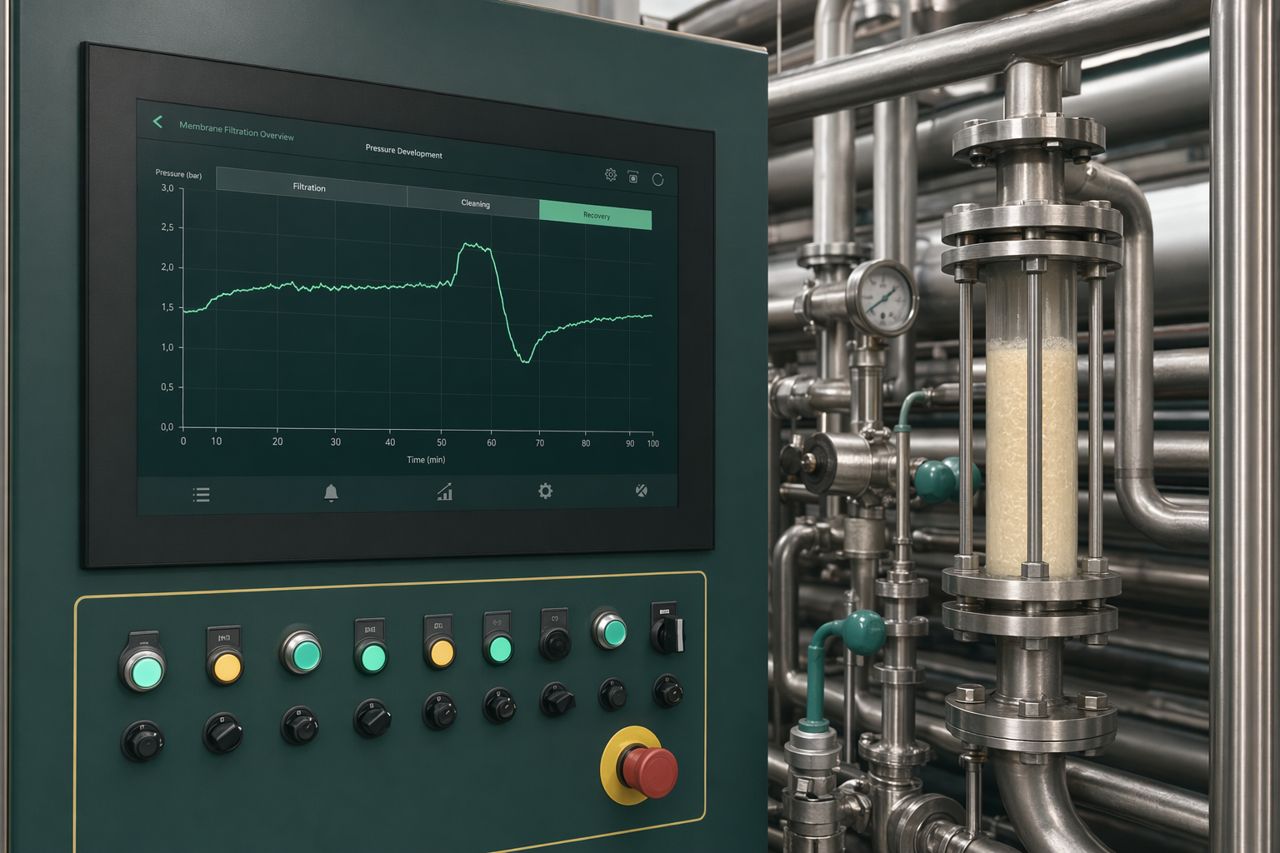
Transmembrane pressure is often treated as a control parameter. It should also be read as a process signal.
A steady pressure curve indicates that the membrane is receiving a feed it can manage. A pressure curve that rises quickly, oscillates or fails to recover after cleaning points toward instability in the material entering the skid.
When reviewing filtration performance, look beyond the membrane panel and trace the feed history:
- Raw material lot and flour particle distribution
- Hydration and extraction time
- pH adjustment rate and final setpoint
- Temperature consistency through extraction
- Decanter or centrifuge loading
- Solids level in membrane feed
- Hold time before filtration
- Cleaning recovery after the prior run
This review helps separate membrane wear from upstream process drift.
Fouling control depends on solids discipline
Solids carryover is one of the most direct causes of membrane instability. Even small increases in fine insoluble material can change boundary-layer behavior, reduce permeate flow and create a fouling layer that cleaning must later remove.
A practical solids-control program should include:
- Consistent extraction slurry concentration
- Controlled agitation that avoids dead zones without over-shearing
- Decanter or centrifuge settings aligned with real feed variability
- Routine checks on separated phase clarity
- Clear escalation rules when solids breakthrough appears
- Membrane feed monitoring before the skid is overloaded
Enzyme conditioning can support this program when the root cause includes starch, fiber or cell-wall structures that make separation harder. The aim is not to push more unstable material into the membrane. The aim is to present a cleaner, more predictable feed.
Cleaning priorities: restore performance without losing production time
Cleaning strategy should be judged by recovery, repeatability and production impact. A cleaning cycle that restores flow once but becomes longer each week is a warning sign.
Key questions for plant teams:
- Does the membrane recover consistently after cleaning?
- Are cleaning intervals shortening over time?
- Is fouling linked to specific raw material lots or extraction shifts?
- Does pressure rise begin earlier after each production cycle?
- Are operators compensating with settings that create downstream issues?
If cleaning becomes the main tool for managing variability, the plant is paying for upstream instability with downtime.
Trial design for enzyme programs in pulse protein filtration
A useful enzyme trial should be built around plant outcomes, not lab curiosity. Before changing chemistry, define what the plant needs to improve.
Operational trial targets may include:
- More stable pressure development during the filtration run
- Reduced solids carryover into membrane feed
- Improved separation consistency before the membrane skid
- Shorter or more predictable cleaning recovery
- Less operator adjustment during production
- More stable yield across raw material lots
A controlled trial should keep the process window practical for the plant. That means working within realistic temperature, pH, residence time and equipment limits. A treatment that performs only under conditions the plant cannot hold is not a production solution.
What to share with an enzyme supplier for pulse protein processing
When selecting an enzyme supplier for pulse protein processing, the most useful conversations start with the plant reality, not a product list.
Helpful information includes:
- Pulse source and incoming raw material variability
- Current process flow from milling through filtration
- Extraction pH, temperature and residence time ranges
- Separation equipment type and known bottlenecks
- Where pressure rise or fouling becomes visible
- Cleaning frequency and recovery pattern
- Target protein specification and downstream constraints
- Current trial history, including what did not work
This allows an enzyme program to be designed around throughput, separation behavior and repeatability instead of isolated bench results.
Practical operating priorities
For pulse protein isolate plants trying to improve membrane performance, start with five priorities:
1. Stabilize the membrane feed
Reduce avoidable variability in solids, viscosity and hold time before the skid.
2. Read pressure trends early
Do not wait for a full bottleneck. Rising pressure is often the first sign that feed behavior has changed.
3. Separate fouling causes
Distinguish between mineral scale, protein deposition, polysaccharide effects and insoluble solids. Each requires a different response.
4. Keep cleaning data tied to production data
Cleaning recovery is more meaningful when connected to raw material lot, extraction conditions and feed clarity.
5. Trial enzymes against plant metrics
Measure success by run stability, separation efficiency, cleaning predictability and yield consistency.
Where Hilum Process Co. fits
Hilum Process Co. supports pulse protein isolate plants with enzyme programs designed for production constraints. We focus on the points where enzymatic conditioning can improve slurry behavior and reduce stress on separation equipment.
Our work is structured for plant teams that need clear trial plans, practical operating windows and measurable outcomes in the filtration train.
If membrane pressure, fouling or cleaning frequency is limiting your pulse protein line, share your current process conditions and constraints. We will help identify where enzyme conditioning may improve feed stability before the membrane skid.
Request a quote through the on-site form and include your pulse source, process flow, filtration bottleneck and target operating outcome.