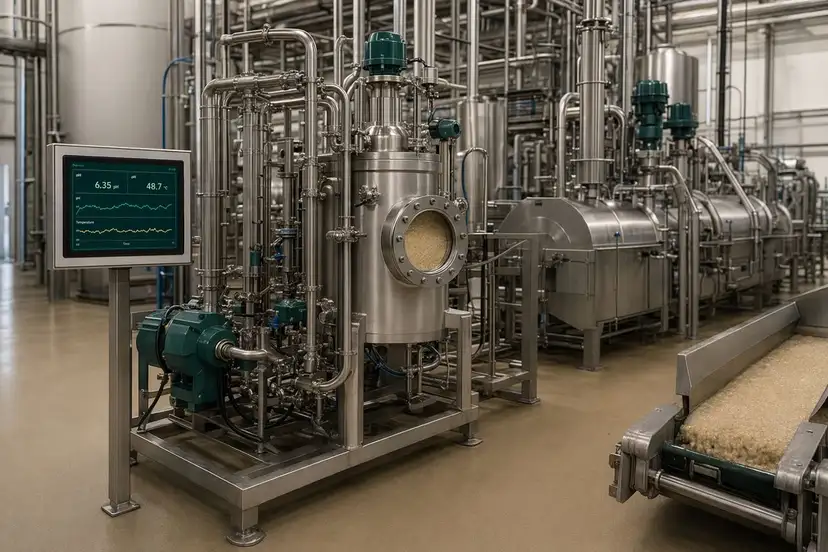
Scaling Lentil Protein Extraction to Production
Practical guidance for scaling lentil protein extraction with controlled enzyme trials, stable slurry behavior, and predictable separation performance.
Request pricing Practical guidance for scaling lentil protein extraction with controlled enzyme trials, stable slurry behavior, and predictable separation performance.
Request pricingPilot results can make lentil protein extraction look cleaner than it will behave in a full plant. Small tanks hydrate evenly. Heat exposure is easier to control. Residence time is visible. Screens and centrifuges are not pushed near their true loading limits.
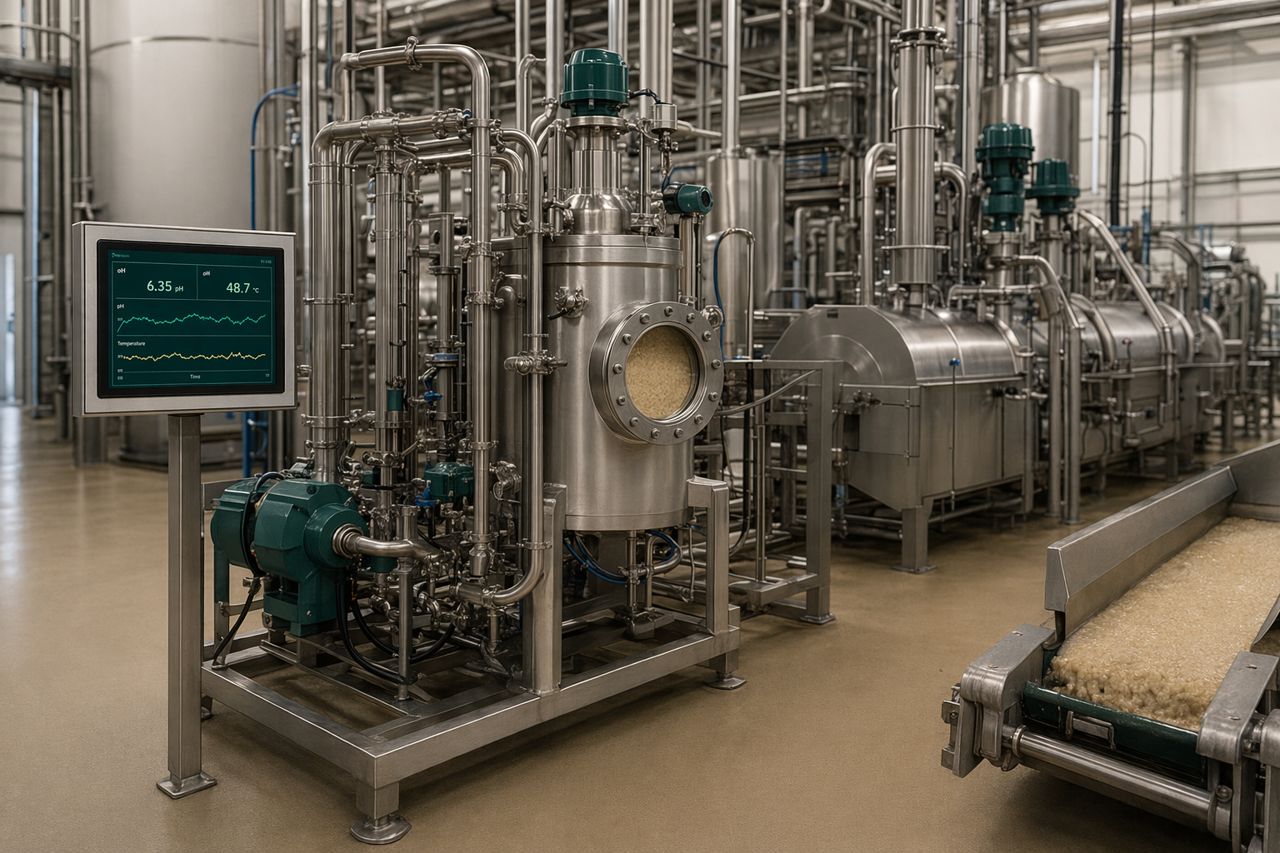
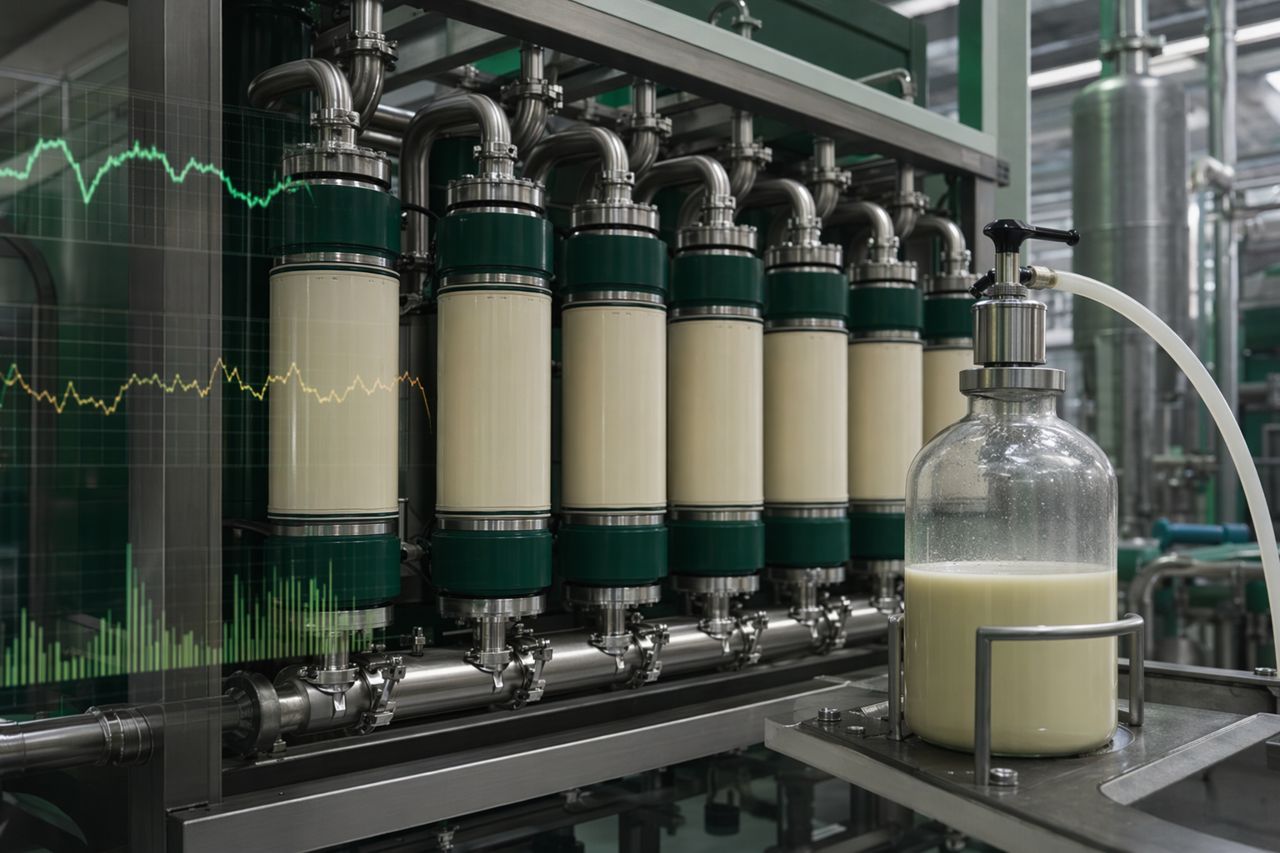
Continuous production changes the picture. Slurry thickens differently. Fine solids recycle. Decanters see a wider feed curve. Membrane systems reveal fouling patterns that were not obvious in short trials. The enzyme step can still add real value, but only when it is designed around the equipment and not treated as a bench note.
Hilum Process Co. works as an enzyme supplier for pulse protein processing with a practical focus: stable yield, controlled viscosity, cleaner phase separation, and scale-up trials that plant teams can trust.
Lentils bring useful protein potential, but their matrix is not passive. Seed coat material, fiber, starch interactions, and fine particulate behavior all affect extraction and separation. When a pilot run is expanded without enough process mapping, the plant may see:
The issue is rarely one variable. Grind size, hydration ratio, pH movement, enzyme contact, temperature profile, residence time, and separation hardware all interact.
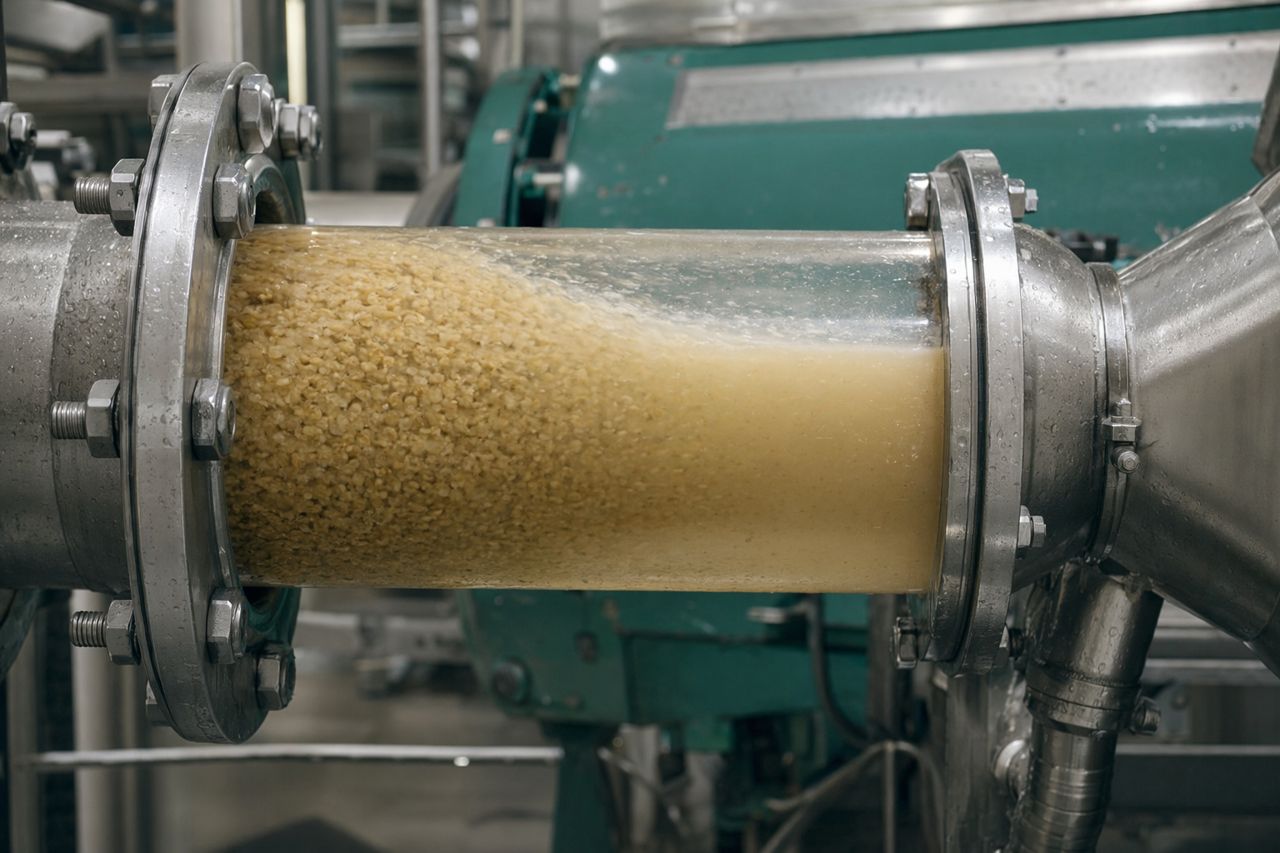
In a small vessel, the slurry may appear smooth enough. At production flow, the same material can show uneven hydration, suspended fines, and viscosity peaks. These peaks reduce separation efficiency and make control loops work harder.
A well-selected enzyme system can help moderate the non-protein fraction, improve solids handling, and reduce the load on downstream equipment. The target is not a dramatic visual reaction. The target is a slurry that moves predictably through the line.
In pilot runs, operators can wait for the material to respond. Continuous plants need a defined contact window. If enzyme contact is too short, the effect may be incomplete. If contact is too long or poorly controlled, the plant may lose throughput or expose protein to unnecessary process stress.
Scale-up planning should define where the enzyme is introduced, how mixing is achieved, what temperature range is realistic, and how the stream moves into separation.
Protein quality is influenced by the full heat history of the process, not only the highest temperature point. Preheating, holding, transfer delays, pH adjustment, and separation timing all matter.
The enzyme step should fit within a heat profile that supports extraction without creating avoidable denaturation, color shift, flavor risk, or inconsistent functional performance.
For lentil protein processors, enzyme value is usually seen through operational outcomes rather than lab language. Depending on raw material and process design, the right formulation may support:
The practical question is not whether enzymes work in a beaker. The practical question is whether the enzyme step improves plant behavior at the throughput your line must run.
A residence time that worked in a small tank may not translate if production mixing leaves dry pockets, dead zones, or inconsistent solids suspension. Measure the real movement of the slurry before locking in the enzyme contact step.
Decanter, disc stack, screen, and membrane decisions should be made with realistic treated and untreated streams. If equipment is selected from ideal pilot liquid, the plant may inherit avoidable bottlenecks.
pH movement affects protein solubility, enzyme performance, and separation behavior. In scale-up, pH adjustment should be viewed as part of the extraction system, not as a disconnected chemical addition.
Small trials often understate what happens when fine material returns to the process. Recycle streams can increase viscosity, change enzyme demand, and shift centrifuge loading.
Lentil raw material varies by crop source, dehulling performance, storage conditions, and grind profile. A scale-up plan should test a controlled operating range, not a single best-case run.
A useful enzyme trial for lentil protein scale-up should be built around plant decisions. Hilum Process Co. typically recommends a controlled comparison that tracks:
The trial should be simple enough for production teams to run and detailed enough for engineering teams to make equipment choices.
For lentil isolate plants moving from pilot to production, separation equipment selection should be based on the stream the plant will actually produce. Enzyme treatment can change how the slurry behaves at screens, decanters, and membranes. That change should be evaluated before final sizing or before accepting a bottleneck as normal.
A good trial does not only ask whether protein yield improved. It asks whether the line became easier to operate at target throughput.
Hilum Process Co. supports pulse protein processors with enzyme formulation guidance and trial planning for real plant conditions. Our role is to help define the enzyme contact point, process window, and evaluation criteria so your team can make decisions with less guesswork.
We speak in operational terms: flow stability, separation efficiency, cleaning impact, protein recovery, and repeatable production behavior.
If your team is preparing to move from pilot batches to continuous lentil protein isolate production, start with the process limits you already know:
From there, an enzyme trial can be scoped to answer the right plant questions.
Share your lentil raw material profile, target throughput, and current extraction layout. Hilum Process Co. will help you scope a practical enzyme option and trial plan for your plant.
Tell us your application and volume — we reply with pricing and lead time.